How to Put More Life Into Each Day

What happens when, instead of simply going through another day, we put life into that day? What would that day look like? How would we feel?

There are so many hours in a day, so many minutes, and each of them can be so fulfilling. Every day can become so full, so intense. So alive.

Living fully doesn’t necessarily mean doing more. It means putting more life into whatever we do.

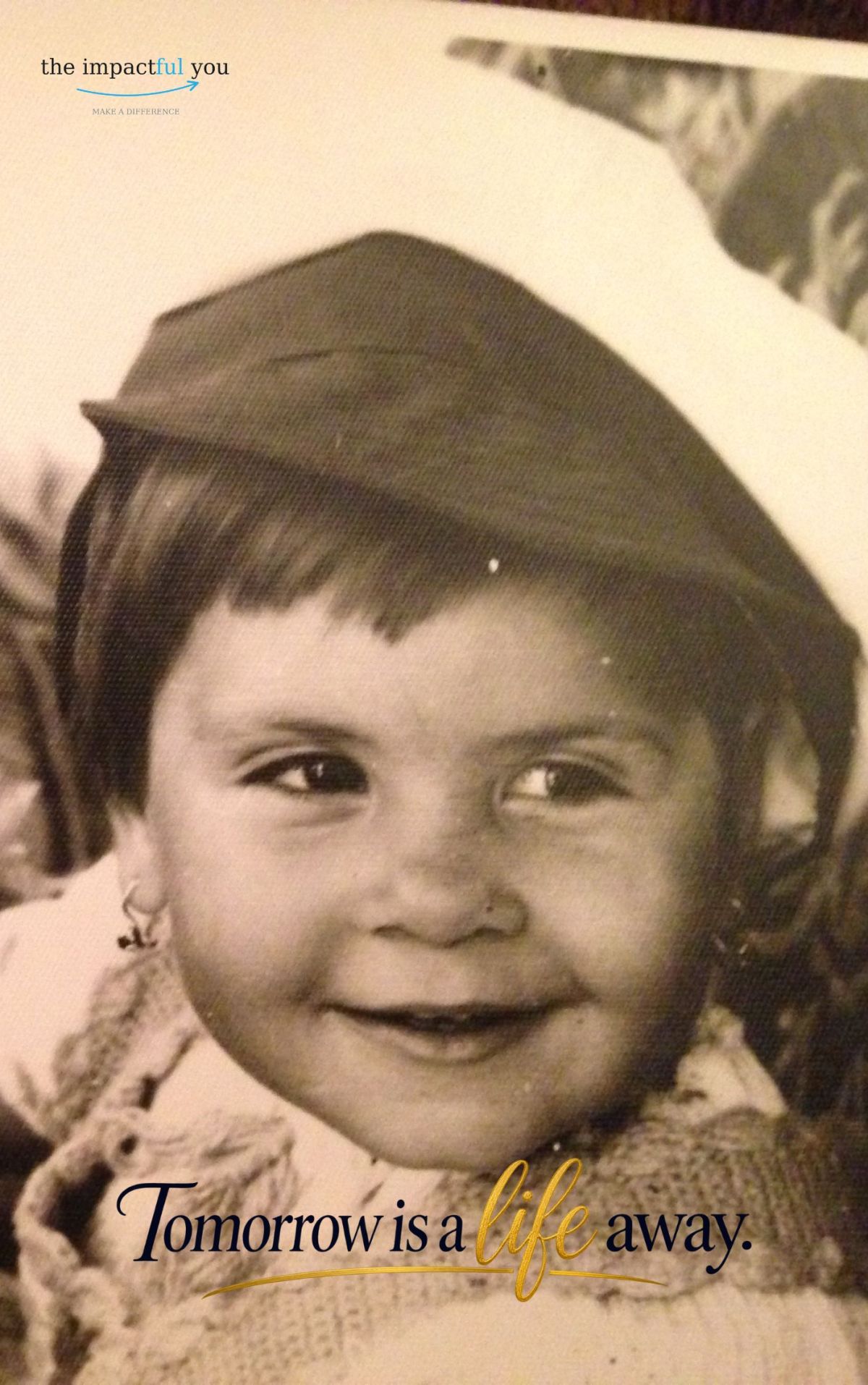
Tomorrow is a life away. Meanwhile, how alive do I want to be today?

Imagine all you have left is 24 hours, 20 hours, 15 hours…

Imagine it’s 8 in the morning. You’re starting your day, and this is it. All you have is today. Now imagine that this could be one of the best days you’ve ever had, full of hours, minutes, seconds… moments upon moments in which you can be fully alive.

Because tomorrow is a life away.

OK, I hope I’ve captured your attention! This is not another article about mindfulness or being present. This is an article about life and making the best of it. Every single day. Every single moment.

Sometimes we go through our days thinking, “God, I’ve made it through another day. One less day to overcome.” That in itself sounds exhausting! And by the way, we all have moments when life feels like too much. Illness, depression, heartbreak… Sometimes simply getting through the day is a victory in itself. I know that pain is part of life, and this article doesn’t ignore it. Yet most of our days aren’t about surviving. They’re about living. And that’s what I want to explore here.

Now imagine going to bed thinking, “What an amazing day! I’m so grateful I got to live it.”

There are so many hours in a day, so many minutes, and each of them can be so fulfilling. Every day can become so full, so intense. So alive. What happens when, instead of simply going through another day, we put life into that day? What would that day look like? How would we feel?

Now imagine living like this today, doing it again tomorrow, and the next day, and the next… How much life could we actually experience, regardless of how much time we have left to live?

I’ve come to realise that we do have time. Not in a nonchalant way, as though we’re immortal. Quite the opposite. In a powerful, empowering way.

Do you remember those childhood days so full of adventures that you couldn’t even remember everything you’d done or what you’d had for lunch? Or perhaps a holiday exploring a new country, a day when you fell in love, the first time you stepped on stage, went skydiving, or simply did something that excited and scared you at the same time. I’m sure you’ve experienced days when you felt incredibly alive.

I didn’t go through one more day. I lived one more day.

So why not make each day a day that matters? Life is long enough when we fill it with what truly matters, when we’re fully aware of the time we have.

This isn’t an ordinary day. It’s an extraordinary day because I’ve decided to make the best of it. And perhaps that’s the interesting part: after a while, extraordinary days become normal. Morning rituals, business, writing, exercising, going for long walks, watching documentaries or movies, spending time with those we love… All these things become part of a day filled with moments we appreciate.

I sometimes have days so full that counting my blessings takes too long! And here’s my little secret: that’s my intention.

I remember people who know a little about my life asking me, “Where do you find the time to do all these things?” And I would think, “What do you mean? There’s so much time!”

Of course, perhaps I’ve been blessed with a naturally high level of energy. Yet I’ve also cultivated that energy every single day. Perhaps the way we experience time has a lot to do with the way we choose to experience life.

The little girl in the photograph

When I started writing this article, I found an old photograph of myself. I was perhaps just over a year old. I looked into that little girl’s eyes and saw so much life in them. I looked at her smile and saw an entire life ahead of her. Looking back now, I know how blessed I’ve been.

Of course, that little girl had no idea how much pain she would experience as she grew up. Yet she was so loved, so alive, that today I can only feel grateful for her. I know how early she learned that life is not guaranteed, and how much she learned to make the best of whatever came her way.

Yes, sometimes it feels like a lot. And yes, sometimes I feel I’m a lot for others! Yet I’m alive. Fully alive. And looking at that photograph, I don’t just see the years that have passed. I see how much life has filled those years.

Now, how about you?

How much life do you put into your days? Are you waiting for the day to pass, or are you excited about what it may bring? How do you feel at the end of your day? Grateful or simply exhausted? Happy that it’s finally over, or peaceful as you go to sleep?

I know, it may sound like living fully means doing an enormous number of things. Yet that’s not what I’m proposing. You can be someone who does a lot, constantly chasing results and achievements, without ever truly enjoying any of them. And you can spend an entire day in contemplation and feel more alive than ever.

Living fully doesn’t necessarily mean doing more. It means putting more life into whatever we do. We all know days that feel incredibly long and days that feel incredibly full. I believe we can bring those two experiences together: a long, full, beautiful day. And eventually, a long, full, beautiful life.

So how do we make this more practical?

1. Reconnect with your childhood energy.

Remember how you played, explored, discovered and became completely absorbed in whatever you were doing. Or spend some time with children around you. Observe them. Play with them. You may feel that time is flying, yet there’s so much life in that time.

2. Set an intention for your day.

Every morning, set the intention to make the best of the day ahead. To honour it, enjoy it and share your gifts with others. Not necessarily by accomplishing something extraordinary, simply by being fully aware of the moments you’re living.

3. Add something to give and something to love.

Tony Robbins says, “The secret to living is giving.” And I would add one of my favourite Ralucquettes: “Love is better than life.”

Find something to give and something to love in your day. Your attention, kindness, time, a smile or a helping hand. Those moments don’t just fill our lives. They make our lives fulfilling.

4. When you feel overwhelmed, pause.

Think about how many hours, minutes and seconds this day still holds. Each one is another opportunity to reconnect with yourself. Like a tree growing in both directions, its roots reaching deep into the earth and its branches stretching towards the sky, reconnect with yourself and with something greater than us.

And ask yourself: how many real problems, challenges or difficulties do I actually have in this very moment?

5. Remember the miracle of being alive.

When life feels heavy, consider how much of that heaviness we may have created ourselves. What reconnects you with the miracle of life? Looking up at the sky, noticing a bee nearby, or simply touching a bracelet that reminds you of something meaningful?

We are all miracles. And our lives can become a beautiful series of miracles when we decide to notice them and experience them.

Tomorrow is a life away

In the end, I truly believe we have so much time. And knowing that gives me peace and gratitude. There is grace in life. There is love in life. And here we are, alive, right now.

So why not start each day with a thank you for this new opportunity, and end it with gratitude for how wonderful the day has been? Not because everything went according to plan. Simply because we got to live it.

Tomorrow is a life away. Meanwhile, how alive do I want to be today?
The Fascinating Story of Courage

Courage isn’t about never being afraid. It’s about having dreams that are bigger than our fears.

How often do we let fear stop us from pursuing something we truly want? And what might become possible when we choose to move forward despite it?

In The Fascinating Story of Courage, let’s explore what courage really means, how it shapes our choices, and why being afraid doesn’t have to stop us from living the life we dream of.

Not everyone is brave enough to live the life they were meant to live. It takes courage to live a fulfilled life. It takes courage to love. It takes courage to think about and do something for others, beyond ourselves and our close family. To give without knowing whether what we offer will be received or appreciated. And it certainly takes courage to go after what we truly want, knowing that we might fail, be rejected or discover that things aren’t as easy as we imagined.

Yet what is courage, really? Where does it come from? And can we learn to become more courageous?

Can courage be taught?

I have always believed that courage isn’t something we can simply teach or coach into someone. Yet we can show courage. We can inspire it. We can help someone discover the courage they already have within themselves.

Think about a child who is told, with absolute conviction, “You can do it!” Because they trust the person saying it, they give it a try. They succeed, and suddenly something changes. The next time, they are a little more willing to try. And the next. And the next.

I witnessed something like this not long ago. I was with a friend and her ten-year-old son at an outdoor fitness area. Some of the equipment was designed for older teenagers or adults, and a few of the exercises were quite challenging.

The little boy decided to try one of them. He tried once, twice, three times, without managing to complete it. At that moment, I asked his mum to call him over and tell him how well he was doing. To tell him she was absolutely convinced that the next time he would manage it, fingers in the nose, as we say in French! Just one more try.

And without him noticing, I started filming. Guess what? He went back and managed it like a star! He was so happy that he tried again. And again. And every single time, he succeeded.

When he came back, I showed him the video. That was it. He now had proof of what he was capable of doing. Not just someone telling him he could do it, but himself actually doing it! And perhaps the next time he faces an even more challenging exercise, he will remember that moment and find the courage to try.

What changed? The equipment hadn’t become easier. His physical abilities hadn’t suddenly transformed. What changed was his belief in what he could do. And sometimes, that’s all it takes to discover courage we didn’t even know we had.

Courage doesn’t mean being fearless

We all experience fear. Courage means going for what we truly want despite that fear. It means refusing to buy into everything our brain tries to sell us when it becomes uncomfortable.

“Why bother?” “Things are good enough the way they are.” “What happens when you fail?” “Why take the risk?” Sounds familiar?

Courage is saying “I love you” first because it feels right, because you want to give love, independently of the fear of rejection, abandonment or not being good enough. Courage is doing what feels right without spending hours imagining everything that might go wrong.

And here is something I find particularly interesting: overthinking can become one of the greatest obstacles to courage. Notice I didn’t say thinking! 😊 Thinking helps us understand, prepare and make decisions. Overthinking can keep us going around in circles until the moment to act has passed. And sometimes, the more we think about everything that could go wrong, the less courage we seem to have to discover what could go right.

Courage isn’t always heroic

We often imagine courage as something extraordinary. Something reserved for heroes, people facing extreme circumstances or making enormous sacrifices. Yet courage is present in so many ordinary moments.

In someone who decides to start again after failing. In someone who speaks up when staying silent would be easier. In someone who reaches out, offers help, tells the truth or takes the first step towards a dream. In someone who chooses to love, even after having been hurt.

These gestures may seem small, yet they can make an extraordinary difference.

And what fascinates me is that courage often comes from something much stronger than fear. It comes from our beliefs. From being more attached to our dreams than to the possibility of not achieving them. From wanting something so deeply that we’re willing to face the difficulties along the way.

Not because we have to. Because we truly want to. Because what we’re moving towards matters more than what might stop us.

The courage to love and the love of life

There is a saying I particularly like: “Loving someone gives you courage, while being loved gives you strength.” And I think there’s something beautiful about that distinction.

Love can give us the courage to do things we might never have imagined doing for ourselves. For our children, for our partners, for our parents, for someone we deeply care about. And sometimes, simply for the love of life itself.

Perhaps courage comes from that very force of life. From our desire to live fully, to experience more, to explore what is possible and to contribute something meaningful beyond ourselves.

We see it in moments of crisis, when people discover extraordinary resources they didn’t even know they possessed. And we see it in everyday life, when someone decides that their dream, their love or their convictions are worth taking a risk for.

So, how do we become more courageous?

People sometimes ask me how they can become more courageous. And my answer is that I cannot simply hand them courage. What I can do is help them discover what matters so much to them that they become willing to move forward despite their fears.

To reconnect with their dreams, their desires and the things they truly love. To stop allowing fear to make all their decisions. To recognise the courage they’ve already demonstrated throughout their lives, even in moments they may have forgotten.

And perhaps most importantly, to become an example for others. Because someone is always watching. A child who sees us trying again after failing. A friend who finds the courage to make a difficult decision because we dared to make ours. Someone who decides to believe in themselves because we believed in them first.

Our courage doesn’t only change our own lives. It can give others the confidence to discover theirs.

And perhaps that’s the most fascinating story of courage. Not simply how much we can inspire or encourage someone to take a courageous action. Courage being contagious is already fascinating enough! Yet witnessing someone succeed, seeing the confidence they gain become truly their own, and knowing you were somehow part of that moment, with them and for them… isn’t that extraordinary?

How to Live a Life with Little to No Judgments

As humans, we tend to complicate life, to make it more difficult than it needs to be. And one way we do that is by judging people, situations, and ourselves, often without even realising it.
Yet how much do those judgments cost us in energy, opportunities, and life experiences? What about positive judgments? Are they any better?
Let’s explore how judging less might help us enjoy life more.

We tend to judge. Maybe cos it’s easy, maybe cos we think we’re right, maybe cos we’ve been doing it more or less unconsciously since forever… We judge others, situations, the world around us, and ourselves. And in doing so, we often make our own lives more difficult than they need to be.

So why put so much focus on judgments? Because I believe they have a considerable impact on our energy, our engagement in life, and ultimately, the quality of our life experience.

As I learned during my coaching studies, many people go through the motions in life, somewhat disengaged from their true passions and fulfillment. As we become more conscious and engaged, judgment and stress lessen, while pleasure, productivity, and our sense of purpose increase.

Hence the importance of being less judgmental and allowing our energy to go toward the things we’re genuinely interested in, based on our own choices and desires.

Just a quick note: when I say judgment, I’m not referring to having good or bad judgment. I’m talking about judging ourselves, others, situations, or even the world as good or bad.

What does it really mean to judge?

Judging a person is deciding who they are, rather than what they’ve done. For example, someone convicted of a crime in the past may be judged as a bad person, with the assumption they’ll do it again because that’s who they are. From that perspective, nothing can be done. They’ll always be that person.

While a judgment in court involves assessing facts, witnesses, and evidence, in everyday life we often rush to conclusions based on insufficient information, feelings, or our own values.

We put people, situations, and ourselves into boxes. And the interesting part is that it doesn’t matter much whether those boxes are positive or negative. They’re still boxes.

Judgments, opinions, and facts: what’s the difference?

Let’s take a simple example.

Fact: On the last three dates I had with him, he arrived at least ten minutes late.

Opinion: He’s always late.

Judgment: He’s unreliable.

Now, an example I love to use is about the weather.

Fact: It’s raining right now.

Opinion: I personally don’t like rain, especially when going to work.

Judgment: This is bad weather!

You see the impact that judgment has on you? From a factual situation, you put yourself into a low-energy state simply because you’ve decided it’s bad. And then you keep adding to it. Why does it have to rain every time I don’t have my umbrella? Why did I move to a city with such bad weather? The value of it? Zero. Because the rain will not stop based on your judgment! It’s not because you tell it, “Bad weather!” that it will go away. All that does is take your energy away and focus it on something outside your control.

Now think a little more deeply: what does a judgment prevent you from doing or experiencing?

Judging someone as unreliable because he arrived late three times may make you angry, especially when punctuality matters to you. Yet it may also prevent you from calling him when you need a good friend around. Not because he isn’t a good friend, but because you’ve decided he’s unreliable.

Without that judgment, what else might you discover about him? Would you be less angry, more tolerant, more open to understanding what happened, and eventually have a better friendship?

And here’s an important distinction: not judging doesn’t mean ignoring facts, accepting every behaviour, or giving up your own values. You can recognise that someone arrived late three times, decide that punctuality matters to you, and make your choices accordingly. None of that requires deciding who that person is.

Are positive judgments any better?

It is irrelevant whether our judgments are positive or negative. Not that I particularly appreciate classifying them that way, as both take away part of the information and prevent us from seeing the bigger picture.

Nonetheless, at the beginning of a judgment-free journey, it’s often easier to identify what we generally call “negative” judgments. I’ve observed this with my clients: recognising when we judge something as bad is often easier than identifying positive judgments. And for now, that’s perfectly fine. It’s already a step forward.

Yet positive judgments deserve just as much attention. Think about someone you’ve decided is wonderful, generous, or always reliable. Are you still seeing the whole person, or only the qualities you’ve chosen to associate with them? A positive judgment may feel better than a negative one, yet it can limit our perspective just as much. The objective isn’t to replace negative judgments with positive ones. It’s to become aware of how much we judge and what those judgments prevent us from seeing.

What about the judgments we make about ourselves?

One of the most destructive things I’ve observed while working with my clients is self-judgment. I’m often impressed by how harshly people can talk to themselves. “How could I be so stupid?” “You’ll never be able to do that. You’re such a loser!” “How come you bought that dress when you’re so fat?”

When I hear this, I often ask: Would you say such things to your best friend? Of course not! So why do it to yourself?

Most people do it almost as a form of protection, preparing themselves for the moment the outside world might be tough on them. Yet consistently speaking to ourselves this way can have a terrible effect. Judgment is associated with what we call catabolic energy, an energy that drains us rather than supports us. And that’s time and energy we could be using for something far more interesting in our lives.

Six ways to reduce and eventually eliminate judgments

Having explored all of the above, perhaps you’re thinking that judging people, situations, and yourself doesn’t add that much value after all. And perhaps you’d like to save yourself some time and energy. So how do we move forward?

1. Become aware of the way you judge people, situations, and yourself.

The words we use are powerful, and our minds often judge by default. Sometimes we even use judgments to self-sabotage, driven by our desire to be right. Once you’ve decided someone is unreliable, you may notice everything that confirms your judgment while ignoring anything that contradicts it.

And there you go! You’re right again! Yet what have you gained? The more aware we become, the more we recognise the trap we create for ourselves by always wanting to be right.

2. Understand first, and understand more, before jumping to judgment.

Try to understand what could explain someone’s behaviour in a particular situation.

Instead of saying, “This person is mean,” perhaps you want to discover more about them. I’ve often seen people regret things they’ve said to or about someone after discovering that person’s full story. You, like me, could do things that mean something to us and something entirely different to someone observing us. You could also make a mistake. It happens.

Who would like to be judged by one mistake for the rest of their life?

3. Assess the basis of your own judgments.

How much of your judgment is linked to who others are or what they do, and how much to your own thinking model? What we think about someone can sometimes be more of a reflection of who we are than of the person we’re judging.

Think about how others may have judged you because of your origins, the colour of your hair, or your social background. Those shortcuts people take to put you into a box based on their own values and experiences. Yet how true are those judgments about you? How do you feel when others judge you? And based on what?

We have a saying back home: Don’t do to others what you wouldn’t want done to yourself.

4. Be more fact-based than opinion- or judgment-based.

As soon as you realise you’re basing your thinking on judgment, try replacing it with facts. An observation isn’t an opinion, and an opinion isn’t necessarily information. It’s subjective. Remember our example of someone arriving late three times. That’s what happened. Everything else is an interpretation.

And what a difference it can make when we start separating the two!

5. Consciously remove judgments when you realise you’re making them.

Instead of fighting to be right and holding on to your opinion, rephrase your judgment in a way that remains true to yourself without putting someone into a box. Simply saying, “I’ve noticed that, in this particular circumstance, this happened…” can already change the way you approach a situation.

You’re not denying what happened. You’re leaving room for a bigger picture.

6. And finally, when someone judges you, ask more questions.

Instead of immediately saying, “You’re not right!” or trying to defend yourself, ask: “What makes you think or say that?”

You may be surprised by what you discover. And sometimes, the answer tells you much more about the person judging you than about yourself.

Ready to give it a try?

Living without being judgmental isn’t necessarily easy. It takes practice, awareness, and a conscious decision to change habits that have probably been with us for years.

For those still fighting to be right all the time, it may be more of a struggle. As long as being right remains more important than exploring other perspectives, letting go of judgments can be difficult.

In the end, it’s still your own choice whether to evolve in that respect or not.

And here’s a little exercise to help you get started. Starting this week, keep what we call a judgment journal. Write down the judgments you notice yourself making. You can use different colours for judgments about yourself, other people, and situations or the world. Some people prefer using their phones, and that’s perfectly fine too. Personally, I think writing by hand helps us notice and remember things better.

At the end of each day, look at what you’ve written. Which judgments appeared most often? What triggered them? And how did they affect your energy, emotions, or decisions? At the end of the week, look at the bigger picture. You may be surprised by how much you judge without even realising it, and how much energy goes into defending those judgments. You can certainly explore this exercise further with a coach, yet even by yourself, you may discover quite a lot.

And perhaps, next time you catch yourself judging someone, something, or yourself, you’ll remember to ask one simple question: Why complicate your own life with so many judgments? In the end, it’s just life. Live and let others live.

What to Do When You Are Not Getting What You Want

What do we do when something we wanted so badly doesn’t happen the way we hoped? How do we deal with disappointment without giving up on our dreams? From welcoming our emotions to accepting reality and making conscious choices, let’s explore five ways to move forward, even when life doesn’t go according to plan.

Yes, I hear you.

That was so bloody important to you. You spent weeks, maybe months, perhaps even years wanting it, preparing for it, working towards it. And it didn’t happen the way you expected.

I hear you, and I stand by your side in your disappointment and pain.

Because yes, when we get what we want, we’re happy. When we don’t, well, that’s another story…

And while I’m happy to sit by your side for a while, I’d also love to explore some other options with you.

Not to make you want something different. Not to convince you that what happened was for the best. Simply to explore how we can experience these moments differently and, eventually, move forward.

Here are five things I find particularly helpful.

1. First, what do we do with our disappointment and pain?

You feel down, defeated, angry, sad, perhaps even undeserving. Whatever you’ve been longing for, working towards for so long suddenly seems out of reach.

And of course you do!

Think about a little kid whose perfect, brand-new ice cream has just fallen on the ground. In that very moment, their entire world is ruined. Because for them, that ice cream was the most important thing in the world. There is absolutely no point telling them, “Come on, it’s just an ice cream!”

Well, we’re not that different. What matters deeply to us matters deeply to us. Nobody else gets to decide how important it should be or how much disappointment we’re allowed to feel.

Yet what do we do with those feelings? We can try to suppress them, ignore them, pretend they’re not there. Does that work? Think about how many times you’ve told yourself, “I don’t want to feel sad.” Did that suddenly make you happy? Did the sadness just vanish? Probably not.

Feelings don’t disappear simply because we don’t want them. Yet that doesn’t mean they have no value or cannot evolve. They come and go.

One of the biggest lessons I’ve learned is how to work with those feelings rather than fight them. I’ve already written quite a lot about acknowledging our emotions, validating them and listening to their messages.

Today, I’d like to explore what happens next, when things still haven’t happened the way we wanted.

2. What changes when we take a little distance?

Here’s something we sometimes forget when we’re deeply disappointed.

The world doesn’t always revolve around us. And thank God for that! When we don’t get what we want, it’s easy to make the whole story about ourselves. Why didn’t I get it? What did I do wrong? Why am I not deserving of it? I’m a good person. I worked so hard. Life is unfair!

And sometimes, yes, life is unfair.

Yet what happens when we take a little distance from our own place in the story? Perhaps what happened has very little to do with us. Perhaps another person made a decision based on their own circumstances, fears or desires. Perhaps there are elements of the situation we don’t even know about.

So imagine we’ve allowed ourselves to feel the disappointment, listened to what those emotions are telling us, and their intensity has diminished a little. We’re back in a steadier, more centred place inside ourselves. What else can we see from here?

Maybe God somehow protected us. Maybe something bigger, more extraordinary, is waiting for us. Maybe there’s still something for us to explore before receiving what we’ve been praying for.

Or maybe none of those explanations is the right one.

Our first interpretation of what happened is not necessarily the only one.

And yes, I hear you. It can still hurt like hell, especially when something you’ve prayed for, longed for and prepared for feels so important that your entire life depends on it. Taking distance doesn’t diminish what you wanted. It simply allows you to see that there may be more to the story.

3. Wanting something and controlling the outcome are two very different things

This point is actually key. I will always encourage people to go after their dreams. You’re entitled to want whatever you want. You’re free to desire it passionately, to work towards it, to prepare for it, to grow into it. Nobody gets to tell you what to want or how much you should want it. That is your power.

Yet wanting something is very different from controlling the outcome.

I can want something with all my heart. I can do everything in my power to make it happen. Yet that doesn’t mean I have the power to make everyone else want what I want. And why would I? Other people have their own lives, their own desires, their own choices. Life happens to them too!

So perhaps the question is not whether we should want something less, but how much of what we want is actually within our control? The parts that are up to us? By all means, let’s go for them! And the parts that are not? Well, what are we going to do about those? I mean, for real…

Notice what happens to our energy when we focus on our desire, on what excites us and what we want to experience. We may feel enthusiastic, inspired, full of possibilities.

Now notice what happens when our attention moves to the outcome we cannot guarantee. Will it happen? When? What if it doesn’t? Suddenly, the same desire that was giving us energy may become a source of anxiety. The desire hasn’t changed. What changed is where we’re placing our attention.

4. Accepting reality is not the same as giving up

Let’s say something didn’t happen the way we wanted. It happened. Or perhaps it didn’t happen, which is exactly the problem! We can be angry about it. We can wish it were different. Yet none of that changes what has already happened. Accepting reality doesn’t mean approving of it. It doesn’t mean accepting that we deserved what happened, that it was fair, or that it was the best possible outcome.

It simply means acknowledging that this is where we are right now. And accepting where we are is certainly not the same as giving up on where we want to go. Sometimes we’ve tried over and over again, and we’re exhausted. We feel we cannot take another disappointment. We just want the pain to stop. So we decide to give up. Yet is that a conscious choice, or is it a reaction to how we feel in that moment?

The same decision can come from two very different places.

We might stop pursuing something because we’re desperate, hurt and convinced nothing will ever work. Or we might decide, from a place of peace and internal alignment, that we’ve explored enough, that our priorities have changed, or that we simply want to move in another direction. And why not? God knows we’re still the masters of our own lives!

We can continue, change direction or stop. The difference is whether we’re making that choice consciously or simply trying to escape our disappointment. Accepting reality gives us the opportunity to choose rather than just react.

5. What happens when we shift our attention from the ideal outcome to what we can actually do?

So, let’s recap a little. We didn’t get what we wanted. We’ve welcomed our feelings, taken some distance from our first interpretation and acknowledged that we can keep wanting something while accepting that not everything is within our control.

Now what?

Well, now we can move forward. I like to think of a GPS. To get somewhere, we need to know where we are and where we want to go. Simple, right?

First, let’s become aware of the situation, just as it is, without judging it. A client didn’t pay me. That’s the fact. End of the story.

Second, let’s accept the situation. It doesn’t mean I deserved it or approve of it. It simply means acknowledging that it happened.

And third, let’s make a conscious choice about what to do next.

This is where something particularly interesting happens.

Where are we placing our attention?

When we focus on the problem, we feel angry.

When we focus on the ideal solution, we feel powerless.

When we focus on what we can do, we feel power. We feel we’re back in control.

What we can do may not be the ideal solution or precisely what we wanted. It may be an intermediate step, another possibility, a different way forward. Yet it is something we can actually do.

Could we spend the next three weeks complaining about what happened? Of course we could! Or we could ask ourselves what other options are available.

That doesn’t mean we don’t deserve compassion. It doesn’t mean we need to be strong every single moment, or that we shouldn’t allow ourselves to be vulnerable.

We don’t need everything to happen exactly as we wanted in order to move towards where we want to be. And who knows? Perhaps along the way, we’ll discover an even greater outcome than the one we originally imagined.

The Power of Authenticity

Authenticity should be the easiest thing to do, and yet being who we truly are can feel surprisingly difficult. Why do we wear masks, adapt to others’ expectations and sometimes move away from ourselves? A reflection on authenticity, fear of rejection and the courage to be real.

Read more: The Power of Authenticity

Authenticity. What is the reason we feel more and more people are acting from a place of lack of authenticity?

To answer that, one could start with self: How authentic am I? How much do I act from a place of being genuine, true, real…?

The changes from the last few decades pushed societies and companies to expect people to act in specific ways, to show up and be in specific ways.

As an example, it is not “well perceived” to show emotions, especially within the workplace: our emotions may make others feel uncomfortable; be the reason someone has a “negative” opinion about who we are; even put us into specific categories: “Can’t work with her/him, too sensitive…”

On one hand, not showing our vulnerability takes away from our authenticity. On the other hand, sometimes authenticity could be mistaken for arrogance.

There is nonetheless a huge difference between being authentic and being arrogant. A person could be arrogant and not at all authentic. Not to mention that arrogance usually comes from overconfidence, while authenticity comes from self-confidence.

This explains one of the main reasons so many people wear a mask almost daily in specific environments. Wearing a mask is far from being comfortable. Yet, removing it may be even scarier. While being authentic, we expose ourselves to judgement and potential suffering. It therefore makes sense for one to keep a mask he/she pretends to control, rather than to open the door to anyone hurting them.

Not to forget that one of people’s main fears is rejection.

Experiences, life and work situations gave us reasons to change, to behave in a specific way, to play a role every day. It takes just a few difficult experiences of “being who we truly are” to choose a different path. And it takes just a few “easy” outcomes of being the way others expect us to be for people to start lying to themselves.

And that could go deep: “Well, he would have never married me if I was not a good housewife”; “My boss will fire me if I don’t work overtime. Everyone in our office does”; “I will lose my friends if I don’t keep going out to this loud bar that I hate,” and so on and so on.

We have no clue, yet we develop all kinds of reasons and we convince ourselves of our truth.

To go deeper, let’s take this last example of going to a bar to please friends. This is how one may want to get challenged on it:

· My first remark is this: from what you are saying, your friends are highly important to you. It is therefore absolutely normal to be afraid of losing them. Just out of curiosity: what makes you think that by not going to that bar you will lose them?

· This is when people start thinking. They may perceive there is something there, yet most of the time they will fight their position. “Well, I did the same a few years back and this is how I lost my best friend.”

Obviously, in that situation our brain will bring back the memory of losing a dear friend, the suffering; and out of protection mode and to avoid more suffering, it will give you the information to keep doing what is working: “That bar is not that bad and frankly you want to keep your friends, don’t you?” This becomes our “own” truth.

That is a very easy story to repeat in our heads. It is just an example, yet it can apply to so many things.

We are all afraid of consequences; we don’t want to be the odd person out. And that is absolutely understandable. All that we want is to be liked. And as mentioned above, rejection is one of people’s main fears.

At the end of the day, this is what you may want to ask yourself:

· How do I know what will happen in the future?

· Because something happened to me in the past, what are the chances it will be repeated in the future exactly in the same way? How do you know?

Let’s go back to the example of working overtime. Ask yourself: If my job takes away my life, my family, will it be worth it? Providing someone could see into the future and show you what may happen, would you agree to pay that price not to lose your job? Would you choose not to see your kids growing up, not to spend time with the one you love, etc., just to keep your job?

It takes a lot of courage to be authentic. Mostly, it takes a great relationship with self. It takes knowing who you are and what is good for you. It takes understanding your own needs and taking care of them by yourself.

I do hear you: all this is nice, yet how do I do that?

The first step is to be aware of it, not to lie to yourself anymore. No, people who will stop seeing me because I don’t follow them to a night bar all the time are definitely not my friends. A boss who asks me to always work overtime is not the best boss, and most probably a company that cultivates that culture is not the best for me. A partner who considers me weak because he/she has seen me crying is not the best partner for me. And the list could go on.

You may agree with all of the above and yet think: I cannot live without him, I cannot do without this job, I’ll feel so alone and desperate without my friends. And you are right: you will. Remember, we often continue with the partner, the friends, the boss whose behaviour we accommodate, that we accept, and for whom we find reasons and excuses.

Authenticity should be the easiest thing to do, and yet it could feel so insecure to just open up and be who we truly are. At the same time, when we embrace it and let go of other people’s opinions, we start living a powerful life experience. We feel free, we feel real, we feel true to ourselves and others.

It takes practice to face the fear and welcome all emotions. It is not easy at first, yet the contrary is exhausting.

As Tony Robbins often teaches “those who are willing to feel everything are able to accomplish anything.”

In which category are you?

Internal alignment as a key to happiness

Happiness

All human beings want the same thing: to be happy. And yet you have heard that so many times, happiness is not a destination but a journey.

So much of what we do or what we think and what we feel is coming from how much we are aligned or not. Aligned with our own core values. Aligned with who we are deep down. Aligned with our feelings, and our emotions. Aligned with our logic and rationality. Aligned with our gut and intuition. Aligned with our genius inside us, aligned with our own potential.

When we feel that deep alignment not only we are highly energized, full of enthusiasm, ready to move mountains, but also we have a sense of purpose and fulfillment as well as a deep sense of connection with ourselves and with others.

The main question is: what makes us feel aligned?

In coaching we speak about holographic thinking, that ability to see many perspectives at once. That is a concept that my dear Bruce D Schiender the founder or Ipec speaks a lot of. That capacity of going through life using like a tree dimensional image: seeing a situation like a whole and in the same time, not only thinking of one dimension but of each of three dimensions. Internal alignment is part of this process. And my coaching clients probably know this by heart now, we speaking about the triangle.

Imagine an equilateral triangle where the 3 angles are logic, emotions, intuition. When we are at balanced all our angles are equals, and we are standing in the middle feeling fully connected. We hear all the messages, from our logic, from our emotions and from our intuition. And when all the messages go in the same direction, when we know that this is the way, when we feel that this is the way and when we sense that this is our way, nothing can stop us.

Why is that important?

First, because we only have one life. Imagine what kind of life we can have from that perspective? Imagine all that we could experience, all that we could achieve, all that we could build, all that we could live. For real, your own life. There is no limit to that imagination nor to the life we deserve and can have.

Second, because you, me and like all humans we want to be happy; as my dear Geshe Tenzin Damchoe teaches: happiness is not something that we obtain in a second, or in a day or in a week or even in a year; it is a permanent intention, practice, attention, we keep moving into that direction. Geshe-la speaks about how long it takes to grow an apple. We start with a seed and from there till we can pick and eat an apple a lot of things must happen. We need to water it, and allow the sun the time to do its job, and we learn patience, and joy of seeing the seed becoming a little green sprout and slowly growing into a tree and blooming  its first flowers and eventually we see the fruits starting to grow, and turning red and ready for us.

It does not happen overnight.

And yet it takes just 1 minute to cut it, to kill a tree.

The same with our happiness journey. It takes the patience and the joy of growing. The truth of path. The experience of moving forward. It is a permanent practice. The apple tree does not say “right now I am too tired to grow”. “I’ll take a break”. It does not complain about the wind blowing too fast, or the sun not being too warm. It just continues its growing, and eventually it will produce its fruits.

It takes time to grow an apple tree, and most important it takes the right seed. As Geshe-la smiles about why do you plant a chili seed expecting to get an apple?

Finally, as mentioned before it is far more easier to give up, many things happen in life, we can get sick, we can lose parents or loved ones, we can get cheated on, we can get stab  in the back by dear friends or partners, we can experience tremendous pain and suffering. And sometimes we just feel like giving up. It takes one big cut to put down an apple tree, with a minute or so. So being aware of that, paying attention to that and having a conscious approach on understanding when we are lacking alignment and instead of giving up to seek what can put us back in alignment it is a an amazing tool and with practice can became our norm. When we know about internal alignment we know when to stop, and instead of cutting that tree down as it does not longer produce a single apple to find out how we can get  back in deep full alignment with self. When our mind, body and soul are aligned we start healing, we start growing again, we start seeing results, we start smiling again. We move forward.

Imagine we meet a person and we want to have a deep connection with that person. It can be any relation: friendship, work, business, love. Where do we meet that person? We meet them where they are at. Meaning they come with their own history, believes, values, experiences, feelings, thinking process, blockages, and so more. So ignoring that, we move directly into judgement, he/she is like that. What do we know about their journey? Who are we to say this is good or this is bad. They do live their own life.

To move forward, imagine we meet them not only where they are at but also where we are at. We come with our own luggage, of emotions, and blockages, and beliefs, and judgments, and so much more.

Imagine what kind of life experience and connection we could have by coming from a place of knowing who we are.

Internal alignment is that : being opened to listen to all the information we have: In this particular situation what is my logic telling me? what are  my emotions telling me? what is my intuition telling me?

We all have access to this information, it just takes practice to tap into those messages and be able to observe.

It takes trust that one could listen, one could access, one could decide not out of fear but in a conscious present way.

And what happens when we are not aligned: the short answer is “We are disengaged from our own life”.

Remember our triangle:

In our western society we are trained to use our brain. To be rational, to be Carthusians, to think through. Brain is a beautiful instrument; In the same time, what is happening when over used? It does not longer work. Like a knife we over sharp it no longer cuts. How many times have you feel that you keep going again and again and again around a problem without finding a solution? Why, because we go into overthinking. We get trapped. Because, in our mind we are always right. Logic is a fantastic decision tool, we need to be able to use our own logic in order to operate in life, to make decision and to move on. Yet it can easily go in overdoing as well. In trying to prove we are right all the time. Finding arguments why this shall be like this and not like this. And when too many conditions have to happen in the same time, and some are not there, the logical connections can no longer operate. And we turn in circle again and again and again. Thinking:  “I cannot find a solution; or, there is no solution”. Remember how many times you felt this way… No matter how much we think we cannot see it. Now by doing so not only we increase frustration, we are blocked by no decision, we are also increasing our mental tiredness. Therefore, making even more complex the decision process. Going back to our triangle, what happens when the logic angle becomes too big; what happens with the other 2 angles? They become smaller, almost inexistent. When in overthinking we cut ourselves from the other information that could provide the right data to move forward.

The same when we are using too much our own emotions. Emotions are the most beautiful things to have to experience life. Humans come with emotions. Now most of us in the western societies we are trained to move away from our emotions, like not to be seen or judged as weak, etc[1]. When we feel too many emotions, we can quickly be overwhelmed by them. When we feel too much sadness, we feel numbed and not able to take any actions. When we feel too much anger , we could do things that we regret after a while, blinded by our anger. When we feel too much fear we could be completely paralyzed and not able to move forward. And when we feel too much joy, we could take inconsiderable risks as we cannot longer see the danger. Now imagine what is happening with our triangle when we have that. The logic and the intuition angles are so small we can definitely not use them much.

Finally, what is happening when we don’t consider our intuition? When we think that voice inside of us is not real. When we ignore it, when we cut it down by overthinking or overwhelming emotions? What dreams we do not fulfill? What journey we do not take? What life experience do we have? And overall what an immense source of sorrow and regrets. We know this deep down ourselves, yet we don’t want that voice to speak loud any longer.

Working on internal alignment is one of the best things we could do to live life at our full potential. It does take practice, and the right coach to help you with the process. And the process may not always feel fun, but it is worth it. It may not be easy, yet it is worth it. And most important, there is a way to get there.

Happiness is not an intangible, unachievable, unrealistic target. It is a way of living when we learn how to practice and honor life. As long as we know and trust there is a way. Awareness is the first step, when we know better we do better.

Here are 3 steps to keep this moving forward:

  • Create your own triangle, you can draw it on your journal, on a vision board, you can take a picture of it and save it as a back screen for your phone or your computer. Make it visible for you so it can be a simple reminder that alignment is the key and that is up to you to be aware and to achieve it.
  • Start practice this every day, every time you may have a decision to take:
    • What is that I feel right now about that step? What is the message of that emotion? Write it down.
    • What is my logic telling me about it? Write it down.
    • What is my intuition telling me about this? Write it down.
    • Sometimes the messages will be perfectly aligned, sometimes not, yet even when they are not, you will be able to take a logical decision, or an intuitive decision, or an emotional decision, and any of these 3 will be taken in full conscience. Not out of fear.
  • Ask yourself: right now what decision do I want to take? What kind of life experience do I want to have? And who is in charge of taking that decision? Most people live like they are immortals. Yet when you look back at your life what is something you wish you could have done, experienced, felt, sensed, known… Now that you know better what are you willing to do?

Today you can still write the script of your life, you are the author, and you are the actor. Enjoy.

[1] https://medium.com/@rgomeaja/the-beauty-of-states-of-soul-5-tips-to-welcome-all-emotions-3f6d63506d7c

The 5 powers we all have on social media

For those asking about how to deal with social media, who or what to follow, what and how to publish, here a slightly longer article to give a different view on social media, and on the 5 powers we all have on facebook, instagram, linkedin, etc.

In this new time of crisis and coronavirus we all spend more time online and on social media. This is becoming our reality today and it is here to stay. How do we make sure we use this time efficiently?

Social distancing, and social media. The words we use the most right now…
To start with, the physical distancing is not social distancing.

How do I know that? Because of the deeper connections I experience every single day online, as I doing the world tour every day. Literally every day from Kenya to Russia, from Japan to USA, from Dubai to Australia, name it, I am blessed to connect with clients, friends, partners every single day. Deep, meaningful, and beautiful connections.
I am forever grateful not to the coronavirus in itself as I am aware of the tragedy linked to it, but for the consequences and these amazing times that offered to me. I love that in one of the talks I was having when someone mentioned the coronavirus is not a disaster it is a virus. The consequences of it could be a disaster. As I’m not a science person I cannot argue or express on the virus itself, yet one of the things that made me reflect about it is the tragedy of deaths and the celebration of life that happen in the same time. Almost like a reminder of what life is all about, about our own mortality, about our own time on earth, about our own decisions, about our own life experience, and about our own power.

We don’t know much, and yet we can do so much.
We may not know how and what created or spread the virus, and at the same time maybe we don’t need to know. I mean I trust the scientists, the virologists, the doctors will assess that, and they will gather the answers and the actions to follow. What I mean by not needing to know, is that without a clear knowledge in virology I will not become an expert overnight, so I’ll have/chose to trust the experts. In the same way I don’t know how the TV works and I can still enjoy watching it. I don’t need to know everything to have a beautiful life experience. And I choose to trust others that are experts in their fields as this is how the humanity evolves.
Besides, me trying to understand by myself will take a long time in absence of specific skills, competences, knowledge a science person has. Secondly it will not necessarily bring the right answers, or answers that are strong enough to be relevant. Finally, it will just take me away from other things that I may know how to do, where I have more skills and experience and to put my entire effort in area I could contribute more and have more relevance. The beauty of interdependence is that seeing the planet as a group of individuals, we can specialize within the group so we can have different knowledge and each of us to contribute to a higher humanity knowledge.
Moreover, as I may not have the relevant skills and information, all that may happen is for me to be or feel overwhelmed and therefore a feeling of losing control, which goes into panic and so forth. And panic is what will take away from my own capability of taking decision and of acting and growing.
Learning how to think, learning how to understand and translate information, being able to create an opinion and a thinking process based on relevant information, relevant questions, that is what may need to happen.
Now what is the main issue here? Why people are not trusting what they see or hear
First: in an area of available, easy to access and free information there is not more discipline of research, people want to have answers fast and therefore they go on Google for anything. And while I am sooo grateful for Google to make available tons of information, there is an issue with the quality of information available. The problem is not that the information that there is not accurate exists, the problem is that we are not trained nor patient enough to check and pick what may be relevant.
Second is that one of the most beautiful and needed profession is dying nowadays. I refer to journalism, journalism is technically a way of presenting facts in an objective way so people can have access to information. Journalism nowadays becomes personal opinions, scandal sells, and whatever a celebrity eats seems much more relevant than real society issues. A journalist nowadays shows the side of the story he/she believes in, in the best of the case, or the one that sells in most of the cases. A journalist nowadays will come fast with a story, without taking months and months of documentation and research and inquiry on a topic. That’s one of the saddest things today. And of course, this is not for every journalist yet those high professional ones tend to be more the exception than the norm.
Thirdly, we are or technically can be social medial all of us. Each of us can be his own television, his own editing company, his own radio station, his own newspaper.
• I can publish my own book on amazon, no matter how relevant that content is or not (editing house)
• I can do my own podcast, and say whatever I want no matter how relevant it is or not (radio station)
• I can do my own youtube channel no matter how relevant it is or not (television station)
• I can write and publish articles on my own blog in whatever topics no matter the knowledge I have or not (newspaper)
And that can be accessed by anyone. Anyone can see my tv station, listen to my radio station, read my newspaper, and my books. Anyone, no matter where they are in the world. That gives so much power when we think about it. All it takes is the right level of marketing, and knowledge on how to make people click on it.
Now while that is amazing and in so many ways, a treasure in itself, it is also one of the most dangerous things in the current context:
• It is enough to know how to do it and it can be used in a very dangerous way
• Even when it starts with a good heart and good intention, the information could not only be absolutely wrong but also having a very bad influence on people
• Most people not only don’t take time to assess but they don’t even know how to do it. Because we no longer teach kids ethics or philosophy or debates, or rhetoric etc etc. We no longer help people developing their own thinking ability. Questioning, doubting, looking for more information before reaching a conclusion or an opinion. And evolve those opinions after.
• Most people think that if they have a sad story and they manage to overcome it, it will be the same for anyone who will copy paste their experience. Which is far for being the truth.
• Most people think that applying a solution which has somehow provided a level of results for themselves will provide the same for others. Which is obviously not working.
• Most people will just be led by their own ego and showing off, versus taking a step back and ask what is the relevance of what am I saying and for whom.
How do I know all these? Is because I spend my life talking with people who want to grow and succeed. And who have read a lot and who have tried a lot, and they are still not there. Why, because if it was working we all would have been happy and wealthy and successful. And the majority of people are not.
Social media today is not necessary having the role it could have. And we are all responsible for it.
Of course a lot of things are happening now online. And I could not be more grateful for it. But how responsible are we for what we publish. And even for what or who we follow.
One of my dearest friends Shen Lim, who is a co-founder of Cool Japon TV is talking about the 4 profiles we could have on social media: the follower, the expert, the influencer and the business influencer. And is nothing wrong to be in any of these cases. Or to have a different profile depending on different parts of our life. But that is for another post.
Basically and without caricaturizing too much, most people will be followers, they have a social media account and go on social media to follow other people. They just get the information, hours and hours on Facebook, Youtube, Instagram, Tik Tok whatever. To a point where now they realize it is even toxic as they don’t even know what happen with their time. While others are alive and living most people are just following the life of a handful of people on social media. With all the consequences that follows. The expert is the one that goes on social media and assess different channels and information trying to understand more and have more perspectives on what is happening there instead of taking for granted everything. They will probably be more selective in terms of who they follow. After we have an influencer, which means someone who has a community, an influencer is someone who has followers and who puts content over there more or less systematically. Now the things is that those that are influencers are not necessary those who have the knowledge or things to share (and I am not saying they are all like this) just those who understand how the system works and take advantage of it. Those who want followers and likes. The more the better. No matter why, no matter the purpose. And after we have the business influencers those who have a system, who put a lot of content in a very systematic way. Usually the people who understood how to use social media to monetize it, like a business, but overall who have enough content to create a trend, a direction. And I have to say some are doing a great job, Gary Vee being one of them for example.
Now why is that dangerous and what is the point of this article.
The danger comes from overall a lack of discernment. Instead of using information to grow our brains, we use less our brains when on social media and therefore reducing its function over all. The same we overuse our emotions, we generally connect from the loneliness of our own screen, and compare. And believe what is said as the ultimate truth, we believe that they, the others all have an amazing life, and love, and joy and happiness, and we are the only one left out. A lot of depression, and deeper mental disorder may result or some even proves it happens already. But overall is a source of sadness as people no longer make the effort of connection, while this is how the social media started. And then it goes into a lack of actions, a lack of going outside and watch the sky, instead of watching a picture of the sunset someone posted. A danger of not meeting someone because is more comfortable and safe to meet them from afar. Etc etc
Now while I write this we are still in lockdown and I am very much aware that not everything is possible now. And this is exactly my point. The danger is what the social media is or can became tomorrow out of fear, after overdoing it for 2 months or so. And in the same time what an amazing beautiful powerful opportunity we all have here.
The coronavirus imposed physical distancing and an increase usage of media, online, etc. that was what most probably saved the most of us, and I am forever grateful. It is today my bread and butter in so many ways.

And I want to encourage all of us to take that power. And to be responsible. And to grow together in this new era of social media and online. And while the online and virtual space will continue to increase, to also make the effort when the lockdown ends to not stay by default in your own media cocoon. And dare to go outside… But that’s for another article.

And if you wonder how to increase your power, let me share with you the 5 powers of social media and why this is in your hands today
1. The power of authenticity: we all want to be successful on social media, I get it, and it’s respectful and understandable. The reality is we all have a huge responsibility while being on media. And there is no secret, the more authentic we are, the more successful we are, including on social media; we don’t have to be more of someone else to get that, all we need to do is to be more of ourselves in that space as well. Think about of a day to day situation, you’ll finally get the ones that are lying or pretending and you want to stay away from them. It is the same on social media. Take a little bit of distance: who do you follow and why,… and whatever you put out there, be yourself and the your tribe will see it. You don’t have to be in a specific way to have or win friends. It’s by being yourself that friends will come.
2. The power of persistence: like everything in life it takes time to build any relation. And social media is a relation. There is nothing that happens over night with no effort, and if it does go viral chances are it disappears as fast as it came. The persistence means you showing up, authentically no matter what. No matter if you are sick, no matter if you are sad, no matter if you have issues, no matter what. Because on social media just like in life this is what happens. We are sick or sad or down and we still go to work, and we still live, and we still do things. So the same in social media, including sharing when you have a bad day instead of putting a fake content about how great all things are, or not even putting a content because you no longer have the energy. The persistence is doing it for yourself and for your followers, even if those come in small or very small numbers. Persistence means you believe in what you are doing. And believing in what you want is the first step to achieving it.
3. The power of sharing: I so love when people share. I guess it was one of the core values I got from my family and from growing up in not the wealthiest country or environment and I speak a lot about it. I am grateful I was born there. Is the value of sharing that anyone finds in these types of societies? And when you go to social media, this is exactly the same. Sharing! Think back of the power of sharing. What do you share? Do you share what you have extra, do you share what is the less quality? What do you share in your social media and why is the same with what do you share in life… There is this saying that rich people give and poor people share. Are you sharing to show off, or are you sharing because you care, because of who you are and what you stand for. I can go for ages on this one, hope you got the point
4. The power of caring : that’s one of the daily reflection I have form my dear teacher Geshe Tenzin Damchoe. He is asking is caring a sharing or is sharing a caring?Caring means that it is not just a technical action, you push a key on a phone or computer, anonymously from the safety of your home. Detaching like we are not humans, like robots instead of we just use a machine, a tool. Caring means connecting back to us humans using this tool, using this machine. Caring means paying attention, taking time, going deeper. Caring on social media means reflecting twice between hitting a like button, caring means taking time to leave a comment, when you have something to say, and add, and most of us we do have after reflecting on it. Caring means contributing. Caring means take time to share and say publicly thank you to someone who did something for you and you benefit from it. Caring means giving credit. It does not take anything away from us, is actually quite the contrary. And it is even working from an algorithm point of view.
5. The power of detachment : probably one of the most important power we all have. This means to not post in order to be obsessed by views and likes. To switch off social media, to not make it our life. And to not be attached tothe result of it. Doing it authentically, persistently, and things will happen. Enjoy the journey without worrying about the result, be a responsible leader, contributor, and human in your life and in social media; that’s not another space that is our space, and our reality. It is not virtual, it is real even more real than ever today.

I trust we can all make a difference. And I thank you for taking the steps towards it. When we know better we do better. That is all. When we think back on why social media started, and life in general, we see there is a different more responsible and beautiful way of living and a richer life experience, let’s celebrate social media by using and experiencing it as much as we do with life, going back to the basics, going back to the core values, and deep connections.

5 winning actions during the lockdown!

Confined!

Some of the words that are the mostly repeated, lockdown, lock in, jammed in your homes…

The latest estimation of people confined at home around the planet is 1 billion people and most probably the number will grow in the days to come.

Some of us have been already confined for 1 2 3 weeks or more for different reasons.

And while the first few days could be a little challenging like I heard so many of my clients and friends saying: “I am an outdoorsy person”, “I am not mentally prepared to stay in”, etc, and the following few days are a little more optimistic as they got to sleep a more or watch movies they did not have a chance to see; when we start getting into the 2nd or 3rd week things are less exciting. The energy is less and less, the optimism as well. “It was OK for a while but how long will that last?”

Indeed, we have no visibility nor control on how long the confinement will last, and mostly within which conditions. For example, as long as going out for grocery is still permitted is much different than not being allowed to leave our homes, which is what happens in parts of the world.

This being said, it is important to remember 2 major things:

· First off “this too shall pass”. Or as someone dear to me put it, this will end, this is not the end of the world.

· Second of all, no matter how much you enjoy or not this time, “this too is your life”

Now when we cannot control things that are happening to us, we can always control what we do, what we think, what we decide, what and how we show up, who we are, etc.

Because we do, we can decide to keep ourselves healthy, to “watch our mind when we are alone, and watch our words when with others”, we can still control our day, we can still choose what kind of information or connection we have and with whom, we can still turn off the TV for example, or pick up a book, or put on the music we like, all these are just a few examples and still in our control.

For me one of the biggest values is freedom; yet I guess when we really have a deep thought about it, what is freedom, can we honestly say that because we are lockdown, we are not free? We can debate on that, yet it is going back to the main definition of freedom for each of us. We can still pretty much do, be, think what we want to. What if instead of thinking someone is restricting your freedom because you are not allowed to go out, you choose, and you decide not to go out because of one of your core values are health, respect of others, and compassion for example. The action in itself is the same meaning “not going out”, yet is a huge difference between those who think they are forced to stay home and those who think they have chosen to stay home.

Yesterday I was on this amazing call with a Tibetan monk and one of the things I loved the most was what he said about our health. He was making a point about those who breathe fast may not live long, and we can talk more about it within which conditions, etc. yet the point was that when we are angry, crying, down on ourselves, we breathe fast, and working on our breathing during meditation practice for example is as important as any medication to stay healthy. He said the same thing, about the power of the mind, like there is not much value added in taking treatment proving our mind is full of negative thoughts, negative in the sense that: “this is not fair”,”I don’t deserve to die”, “I don’t want to feel so sick”, “why all these things happen to me when others are just fine”, “what did I do to get this illness”, “why me”, etc., etc.

Watching our thoughts is an important part of how well we are living our lives, no matter the life conditions we may have to face.

I will invite each of you to imagine few years from now, telling the story of what happen during these weeks. Imagine how you would like that story to be. Or even better why not start writing a story, take the time to put it on paper or on your computer. How would you like that story to be? Will you focus on how terrible those days have been or still highlighting the beautiful things that happen to you, how your life has evolved, how the world have changed before and after the corona virus of 2020…

Plenty of people around the globe are confined to homes. Yet not each of us will get out of this crisis in the same way. To go more practical on how to make the best out of this exceptional time, here are 5 things you may want to implement:

· The first thing is to have a schedule, a real agenda. With things to do, time to get out, shower, dress, and all the rest. Time to go into your morning routine, time for cooking and eating, time for sport. Time for working. And highly important, time to reach out and speak with friends and family. All that you may usually do on a normal week yet now you will change the way you do those, and you will do it daily. Have a schedule of your day is allowing you to:

o Take care of what is really important, essential.

o Make sure you have time for things that you want to see happen

o You take control of your day, instead of your day controlling you

· The second thing is to feed your mind properly. Now as important as the food you eat in order to still enjoy life and stay healthy is how you feed your mind. It is up to you who and what do you want to follow. Yet watching a news channel 24h/day 7/7 may be not the best idea. Watch how you feel when you do that: does that give you energy, enthusiasm, a feeling of purpose and fulfilling. And if not, turn it off. You can still watch the news during specific times you schedule for, and that’s it. What do you think it will happen in few hours you are not connected to the latest news? Not to mention they tend to keep repeating. Same for what and who you follow on social media, are you spending time watching what whomever said about this virus, or convictions, or opinions or whatever prediction of the future? Or are you using this time to feed your mind with new information, learning something new, connect and follow people you resonate more with, or give you the sense of energy, vitality, engagement trough life you are looking for. So many things are now available online, the choice is still yours.

· The third thing that I found extremely important is to breath and to expose yourself to day light. Things we do not have to think about in a normal day to day. Now I know most of us in big cities we have no gardens, no parks to go out, yet most of us we still have balconies or windows. A great practice is to just open your window and take the light and the air for at least 1 h a day. You may have the sun coming up as in part of the world we go in spring season, and the weather is nice and warmer, or it may still be cold with left over winter. No matter the temperature, you can still dress with appropriate clothing and open your window and enjoy for 1 h. You can do that in 2/3 times if 1 h seems a lot, especially if you may not have a chair you can use nearby etc. An alternative of this is to do some kind of sports while by the window, like stretching or putting your arms up in parallel, to take the most benefit of it. Natural light and sun light, even if the sun does not shine directly towards your window is great not only for your health but also for your mood and overall morale.

· The fourth thing is to allow time to meditate, listen to what your body, feelings, emotions and intuitions are telling you. Be fully in the moment. Now. This is an important time you have with yourself. The other day when I challenged a client to see the opportunities in this situation we came to speak about time. About how much he complained before of not having time. And now this is no longer an issue. For most the relation with time may be challenged during this period. For most you l realize how long time could be; and yet time is one of the blessings of this crisis. As you have time, allow some of it for yourself with no fear. Providing you are with family and friends, you can still step aside even in the bathroom to take time to be with yourself. Allow the fear to express if any, sense what danger that fear may indicate as a message, and take note on it. Allow any other emotions to come and welcome them and if you don’t know how, go and check the related post on it.[1]

· Finally, reflect on what you thought impossible and now you see it is possible. This is probably the one I love the most. In now days, so many people are telling us what is and what is not possible that some of us begin to trust, that indeed some things are impossible, we even repeat it to ourselves till we believe this is the absolute truth. Yet now days, we can also see impossible turned into positive. The planet is recovering much faster than we ever thought, we can spend so much less than we ever thought, we can stay inside the entire day, day after day, we can still be happy independent of what is outside, and so on and so on. Come on make your own list, I am sure you will find more things to add. And after you do this first list, go into a second list, what is something that you still believe is impossible, come on let it out, put it on that list, let’s see how many things you can come up with. Now that you know one day you will go out, what are the first things you’ll do, what will you enjoy the most, what is on that dream list you thought you will never do, what are the things you have put on hold, for someday, when I will be or I will have or I will do whatever it is you want to do. Come on make that list, and dream big, bigger than your fears, bigger than your excuses, bigger than that “It’s impossible” thought. Because you can see for yourself how wrong some people, information, believes were. You have seen it is possible, now what else will you make possible.

I cannot wait to read your lists, to hear your story, and to see your fulfilled smile and life unfolding for you.

I’m not saying is easy. I’m just saying is possible.

And to quote someone very smart, remember what we appreciate, appreciates. Hope, smiles, enthusiasm, positive energy just like the virus are contagious. Let s give it a try. Enjoy

[1] Check out the article on how to deal with our emotions https://medium.com/@rgomeaja/the-beauty-of-states-of-soul-5-tips-to-welcome-all-emotions-3f6d63506d7c

Life and business in time of Coronavirus. 5 hidden opportunities.

This morning I was thinking of all the new crisis generated by the Coronavirus and the related outcome in many areas of life and business.

And thought of this question: do you know of any emergency, difficult situation, unexpected stuff, or even a crisis, popping up at a convenient time?

Most of the time things just happen; even the most relevant experts are not always ready or prepared to see and predict all of the things coming up. And of course some of the things are more anticipated than others, and the world is more prepared. Yet overall it is not necessary about how well we anticipate a specific crisis that is probable to happen, but how do we keep ourselves prepared for whatever happens and how do we react when things don’t go as planned or the unexpected pops up, out of nowhere.

The current crisis is a result of a virus, that is dangerous enough for governments all over the world to take very drastic measures. Now, I am not a doctor nor a medical expert so I will not comment about how dangerous this is or is not, what the death rate is or why this shall be more serious than a season cold epidemic. I will just trust the experts in the sense that something may shift into the near future to create a bigger crisis and that prevention is always the best.

This being said, it still remains the situation as it is right now. In most countries we see not necessary a lot of death cases as a result of this virus, at least not at the time I am writing this, non the less there is a lot of impact on overall life and business. Schools getting closed which create an issue for parents, and finding solution for kids. Meetings and events rescheduled, which create a big issue for people who have been organizing those for months sometimes. A big list of ongoing projects on hold because this may not be the best time to move forward in time of uncertainty. And definitely much less travels which makes the airline and travel companies all over the world being the sector that would suffer the most in a first phase.

Now this in itself could be enough to be concerned about. Yet there is a big difference between being concerned about something and being panicked or even worried about it.

The main difference if that in a state of panic or worry, the mind is not functioning at the best of its ability. That makes sense because when in panic the human mind freezes so instead of finding solutions it goes into creating more catastrophic scenarios to add to the panic. And giving a change we all would love to tap into our full potential when expose to a crisis isn’t it.

As I usually explain there are 2 type of fears, one that is helping us survive which is exposing a sense of danger that pushes our brain to find a quick solution and react, and one that is slowly killing us. The first one appears when the danger is real, like a fire starts next to you, or someone is holding a gun to your head or similar. In that case you may find that running away is saving you for example. Stay with me on that one, I am not saying what is the best idea I am just saying that the mind will immediately come up with something to fight the danger. In a second case is the fear of a fire that will start in your home right now. No matter the probability for that to happen you may know people living in that fear of a fire starting in their home, or an earthquake or something similar. Now, the point is not to say how ridiculous that could be, but to explain a fact: to those people (and btw we all have our own “fire” fears expressed in our own ways) any logical approach will not help. They will act or be overwhelmed by a fear they sense as real. Except that in those situations, as the danger is not imminent the brain does not know how to react to move you away from that fear. The only thing the brain does is to add more catastrophe scenarios and developed even a higher fear, and that can go into panic attacks, or more not to name here.

The entire purpose is that: while the first type of fear is helping us survive and the fear will go down as we move away from danger, the second one will not allow us to live, and it will increase no matter how much logical explanation we used for that.

Why is important to establish in which case of fears we are? Mainly in order to know what we are doing next. The key here is that the second type of fear, the one linked to what may happen, it will manifest prior for the danger to actually be produced. Have you noticed for example that we are afraid of let’s say an exam or a doctor appointment, a public speech, etc before we go, and as soon that starts we forget about the fear and we concentrate on what we have to do?

That is an important point in dealing with fears, and eventually worry, anxiety and panic attacks.

Why we speak so much about this, because in the case of coronavirus we see a lot of people worrying and getting anxious about it. Which is understandable considering most people are not necessarily worried about themselves but in addition they worry about their kids or their elderly parents that could be more at risk in such a situation.

Now like I used to say it for a while now, worrying about something has no effect on how that situation will unfold tomorrow. The only effect it has is on how ready we ‘ll be when or if that risk happens.

Ok, so let’s say you are worried, ok, it makes sense, so what, now what?

You see as soon you turn it into action you may realize there is more to do than just lie in a bed covered in anxiety and waiting for you to die, or for the coronavirus to contaminate you and your loved ones.

There are opportunities that show up. Why not reflecting on those for example? Someone will have to. Why not you?

When a crisis happens, the current models are challenged, and we talk not only about current business models, but also thinking models, ways of living, things that happen without us thinking of them, that have become natural or habits.

And it is not because they are ours and feel so natural that they are not to be challenged, reconsidered or that they are still relevant in today’s world.

The beauty of a crisis is that it forces us to see things differently. It pushes us into admitting that whatever it was working so far can not longer be applied in the same way. We can no longer play the ostrich, the crisis is here, something must change.

There are a few questions you may want to ask yourself to face the situation:

1. What is the opportunity here? Now, I do hear you, the situation is challenging what the heck she is taking about opportunity here. And when you have a deeper look, there are opportunities here and people already listed a few of them. The only difference is who can see them; is not the person who is in panic mode but those who are open and ready for something else. The biggest opportunity here is on an environmental side, with coronavirus already having such positive impact on the planet, to start with. The second is an opportunity to change the business model, like working remotely could take a different meaning from now on, and we could realize how much more we can do when we save time for travel for example. Or how much more productive we can be when focused on the task and not losing time in traffic, etc. The 3rd is the opportunity for the entire world to focus on a specific topic, adding a multitude of diverse minds focus on solving an unique problem; and how the world could collaborate without necessary going into never-ending meetings, and doing them based on videos conference and other media that are forcing people to be more focused and straight to the point. And I am sure each of you can come up with ideas linked to your own environment.

2. What is the panic or the anxiety adding to my life, or differently put how is this helping me? And if the answer is “nothing much, it does not help”, maybe this is the time to create a new projection for yourself. Why not creating a story that helps you instead of a horror movie that is freezing you. And that can also be created while writing or putting together a vision board of something that looks completely different than your fear today, something that you are excited to move into and experience.

3. What is your intuition telling you? When you go into time of crisis, you want to get as much aligned with yourself. In order to be aligned we use different type of messages. We have messages that are coming from our logics, messages that are coming from our emotions and messages that are coming from our intuition. Now what we aim for is to give all these messages space to be heard. When we overthink, we only hear the messages from our logic, when we are overwhelmed by fears or other emotions, we only hear those messages. It takes balance to give space to each logic and emotions to be heard and messages to be received and by doing so, allowing the intuition to come to you as well. We all know inside ourselves when we are at peace what are the things to take seriously and what are just exaggerated projection of our logic or our emotions.

Now, for those who are part of the millions of people who must already stay confined home and or have to change all their schedules, here are 5 things you may want to explore:

1. Providing you are with your kids or loved ones, why not enjoying it. When was last time you had time to just be with them all around you? What a joy to actually be there with them and have time to enjoy, right?

2. Providing you are by yourself, what an amazing opportunity to grow. In today’s world we always lack time. Now this is your time to learn something, or to rest, or to watch all the Netflix you want without feeling any guilt. I know some of you are now looking forward to have that time for themselves.

3. Providing you are a business owner, what a great moment to take that time away from your business, to have that helicopter view that is taking you away from day to day operations and allow you to see the bigger picture. And you also have some time to do that laser focus approach, to take a problem and think about solutions for 10 15 minutes. Asking yourself what is the root cause of it, and go deeper and deeper; there is a beauty in having time for this kind of exercises, when no calls or emails are coming in, because you may get answers that would be unavailable to you in a day to day situation.

4. Providing you are a consultant I think that is one of the greatest position to be right now, to assess the world and think of a different ways of doing business. Critical thinking, business design, are the areas where most businesses will need support, and this is almost the perfect time take out to allow us to think about solutions. The world will need a different way to do business and consultants (to use a general term) could be at the top of that different way of doing business; providing they will take time to think and challenge the existent instead of looking within today’s world to find solutions for a complete new situation. This is no longer a time to compare and look for best practice but more a time to assess and invent (like an internal disruptor) what could tomorrow solve the problems most businesses are facing today. You can definitely start by putting on a paper what are the challenges you, your clients or a business are facing today. When a problem is well structured a solution starts to be seen.

5. Providing you are a coach, people will need your more than ever. Take this opportunity to address topics that are needed for any of us, like what am I doing in this article, address fears, address building opportunities, address community when at distance and any topics that are helping people to see a different world out there; something to look forward to instead of something to be worried about. The world needs you and in a situation like this you as a coach have access to all the social media that is providing the means of communication to touch as many people possible.

Hope this is giving you a different perspective no matter where you are in the world and how the crisis is unfolding for you right now. Those who will survive will be those who will adapt faster to the new reality. Those who will see the opportunity instead of obstacles. Those who are using this time to reflect and find new ways of doing and being. Us as humans can go behind and above any situations, we just need to tap into this collective awareness and creativity and allow ourselves to create a new way of thinking. The great news is that we as an evolutive community created the current one, to begin with. So, we already know how to create a thinking model that works. And I can’t wait to see what this will bring to each of you.