Not everyone is brave enough to live the life they were meant to live. It takes courage to live a fulfilled life. It takes courage to love. It takes courage to think about and do something for others, beyond ourselves and our close family. To give without knowing whether what we offer will be received or appreciated. And it certainly takes courage to go after what we truly want, knowing that we might fail, be rejected or discover that things aren’t as easy as we imagined.
Yet what is courage, really? Where does it come from? And can we learn to become more courageous?
Can courage be taught?
I have always believed that courage isn’t something we can simply teach or coach into someone. Yet we can show courage. We can inspire it. We can help someone discover the courage they already have within themselves.
Think about a child who is told, with absolute conviction, “You can do it!” Because they trust the person saying it, they give it a try. They succeed, and suddenly something changes. The next time, they are a little more willing to try. And the next. And the next.
I witnessed something like this not long ago. I was with a friend and her ten-year-old son at an outdoor fitness area. Some of the equipment was designed for older teenagers or adults, and a few of the exercises were quite challenging.
The little boy decided to try one of them. He tried once, twice, three times, without managing to complete it. At that moment, I asked his mum to call him over and tell him how well he was doing. To tell him she was absolutely convinced that the next time he would manage it, fingers in the nose, as we say in French! Just one more try.
And without him noticing, I started filming. Guess what? He went back and managed it like a star! He was so happy that he tried again. And again. And every single time, he succeeded.
When he came back, I showed him the video. That was it. He now had proof of what he was capable of doing. Not just someone telling him he could do it, but himself actually doing it! And perhaps the next time he faces an even more challenging exercise, he will remember that moment and find the courage to try.
What changed? The equipment hadn’t become easier. His physical abilities hadn’t suddenly transformed. What changed was his belief in what he could do. And sometimes, that’s all it takes to discover courage we didn’t even know we had.
Courage doesn’t mean being fearless
We all experience fear. Courage means going for what we truly want despite that fear. It means refusing to buy into everything our brain tries to sell us when it becomes uncomfortable.
“Why bother?” “Things are good enough the way they are.” “What happens when you fail?” “Why take the risk?” Sounds familiar?
Courage is saying “I love you” first because it feels right, because you want to give love, independently of the fear of rejection, abandonment or not being good enough. Courage is doing what feels right without spending hours imagining everything that might go wrong.
And here is something I find particularly interesting: overthinking can become one of the greatest obstacles to courage. Notice I didn’t say thinking! 😊 Thinking helps us understand, prepare and make decisions. Overthinking can keep us going around in circles until the moment to act has passed. And sometimes, the more we think about everything that could go wrong, the less courage we seem to have to discover what could go right.
Courage isn’t always heroic
We often imagine courage as something extraordinary. Something reserved for heroes, people facing extreme circumstances or making enormous sacrifices. Yet courage is present in so many ordinary moments.
In someone who decides to start again after failing. In someone who speaks up when staying silent would be easier. In someone who reaches out, offers help, tells the truth or takes the first step towards a dream. In someone who chooses to love, even after having been hurt.
These gestures may seem small, yet they can make an extraordinary difference.
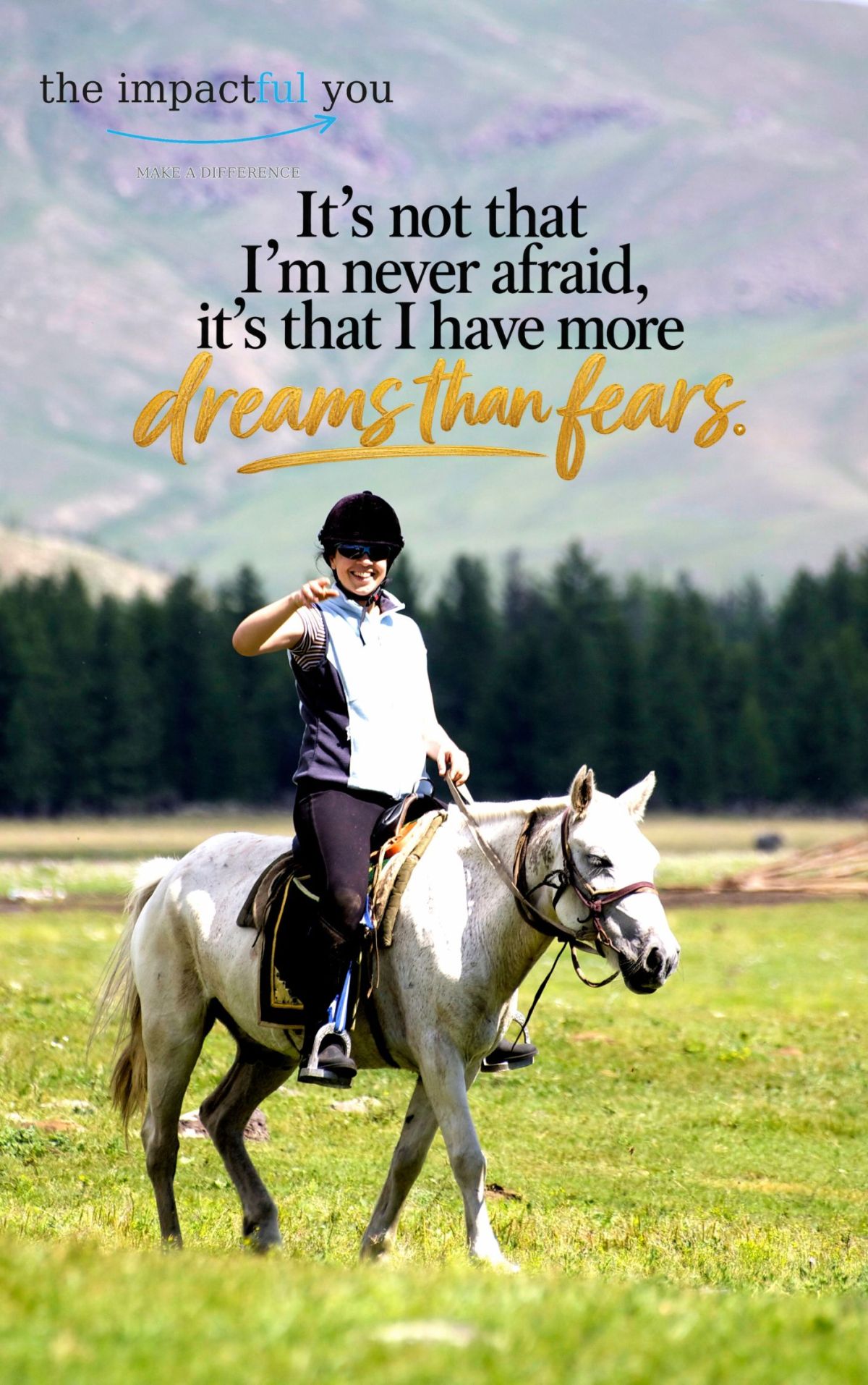
And what fascinates me is that courage often comes from something much stronger than fear. It comes from our beliefs. From being more attached to our dreams than to the possibility of not achieving them. From wanting something so deeply that we’re willing to face the difficulties along the way.
Not because we have to. Because we truly want to. Because what we’re moving towards matters more than what might stop us.
The courage to love and the love of life
There is a saying I particularly like: “Loving someone gives you courage, while being loved gives you strength.” And I think there’s something beautiful about that distinction.
Love can give us the courage to do things we might never have imagined doing for ourselves. For our children, for our partners, for our parents, for someone we deeply care about. And sometimes, simply for the love of life itself.
Perhaps courage comes from that very force of life. From our desire to live fully, to experience more, to explore what is possible and to contribute something meaningful beyond ourselves.
We see it in moments of crisis, when people discover extraordinary resources they didn’t even know they possessed. And we see it in everyday life, when someone decides that their dream, their love or their convictions are worth taking a risk for.
So, how do we become more courageous?
People sometimes ask me how they can become more courageous. And my answer is that I cannot simply hand them courage. What I can do is help them discover what matters so much to them that they become willing to move forward despite their fears.
To reconnect with their dreams, their desires and the things they truly love. To stop allowing fear to make all their decisions. To recognise the courage they’ve already demonstrated throughout their lives, even in moments they may have forgotten.
And perhaps most importantly, to become an example for others. Because someone is always watching. A child who sees us trying again after failing. A friend who finds the courage to make a difficult decision because we dared to make ours. Someone who decides to believe in themselves because we believed in them first.
Our courage doesn’t only change our own lives. It can give others the confidence to discover theirs.
And perhaps that’s the most fascinating story of courage. Not simply how much we can inspire or encourage someone to take a courageous action. Courage being contagious is already fascinating enough! Yet witnessing someone succeed, seeing the confidence they gain become truly their own, and knowing you were somehow part of that moment, with them and for them… isn’t that extraordinary?
